A church retreat creates room for that.
It may be a leadership retreat, a men's or women's weekend, a youth gathering, a small-group retreat or a whole-church weekend. Whatever the format, the aim is usually similar: to create space for people to connect with God, strengthen relationships and return home refreshed and with greater clarity.
The venue matters, but a successful church retreat is about much more than finding enough beds. Here are some of the most important things to consider when planning a church retreat weekend in NSW.
1. Begin with the spiritual purpose
Before choosing activities, accommodation or even the venue, decide why you are going away.
What are you hoping God will do during the weekend?
Perhaps your church needs time for worship and prayer. Your leadership team may need to seek direction together. A men's or women's ministry may want to strengthen relationships. A church may simply want families to have time together away from the normal Sunday programme.
Try to express the purpose in one or two sentences.
That gives you a filter for everything else. If the main purpose is prayer and spiritual renewal, the programme should leave significant space for that. If relationship-building is central, filling every hour with teaching sessions may work against what you are trying to accomplish.
2. Choose somewhere that feels genuinely different
There is value in physically leaving the normal church environment.
When people arrive somewhere surrounded by nature, away from their ordinary routines and responsibilities, the pace begins to change.
That does not mean a retreat venue needs to be extremely remote. In fact, accessibility matters, particularly when families, older people or larger groups are attending.
The ideal balance is often somewhere that feels secluded once you arrive but remains reasonably accessible from a regional centre.
The Coffs Harbour hinterland is a good example. Groups can be surrounded by valleys, forest and natural landscapes while remaining within reach of Coffs Harbour and the wider Mid North Coast.
3. Consider the value of having the property to yourselves
Privacy can make a substantial difference to a church retreat.
When a group has exclusive use of a property, worship, prayer, meals and conversations can develop much more naturally. People aren't continually sharing common areas with unrelated holidaymakers or another conference.
This can be particularly valuable during ministry times or sensitive leadership discussions.
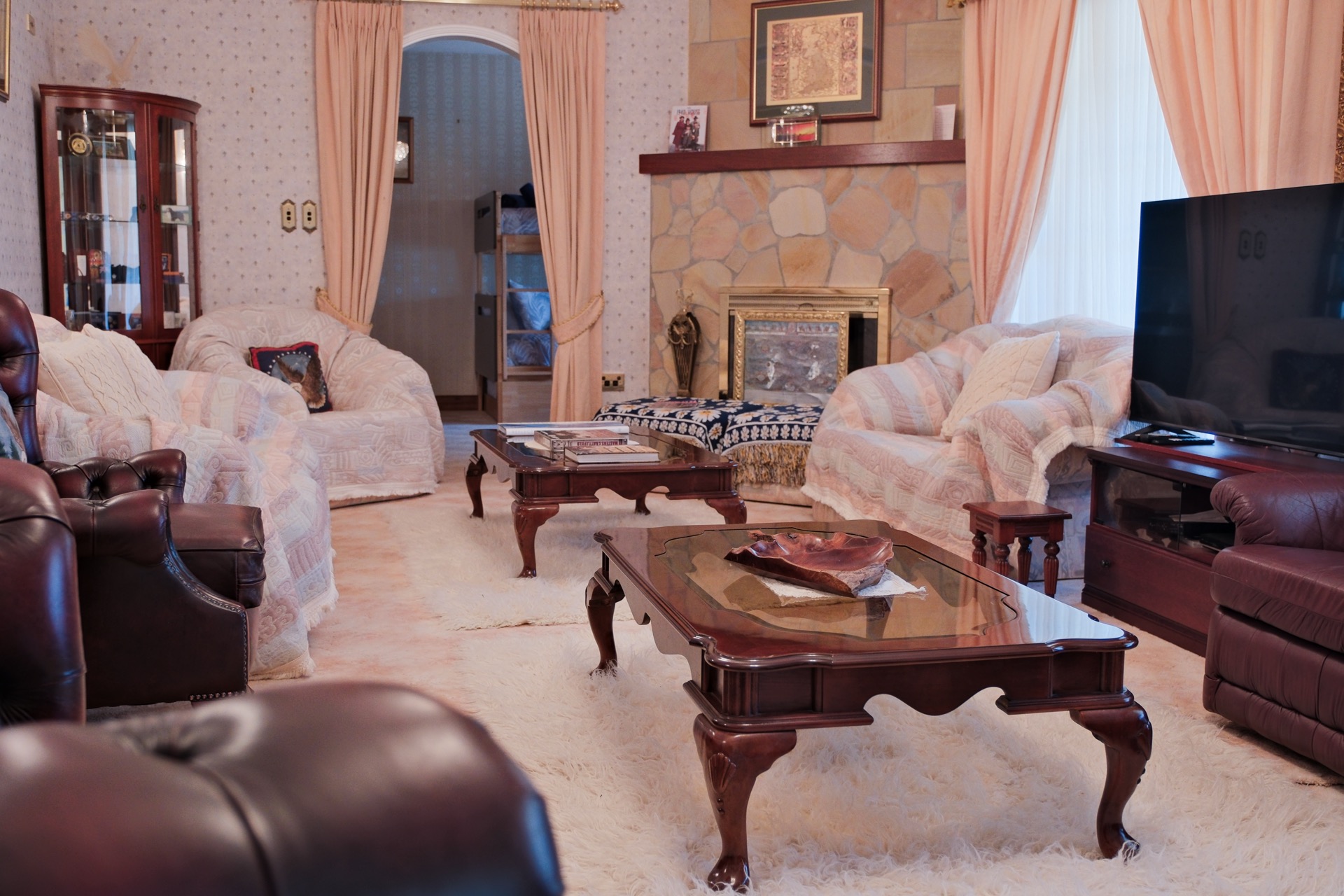
It also changes the feeling of the weekend. Instead of being a collection of individuals staying in separate hotel rooms, the church begins to inhabit the property together.
At Oasis of Hope in the Coffs Harbour hinterland, this is one of the significant advantages for retreat groups: the estate can become the group's own environment for the duration of the gathering. Our church retreat venue page covers how that works for a church group.
4. Make sure your meeting space fits your programme
Different retreats require different spaces.
A leadership team of twelve people discussing strategy has very different needs from sixty people gathering for worship and teaching.
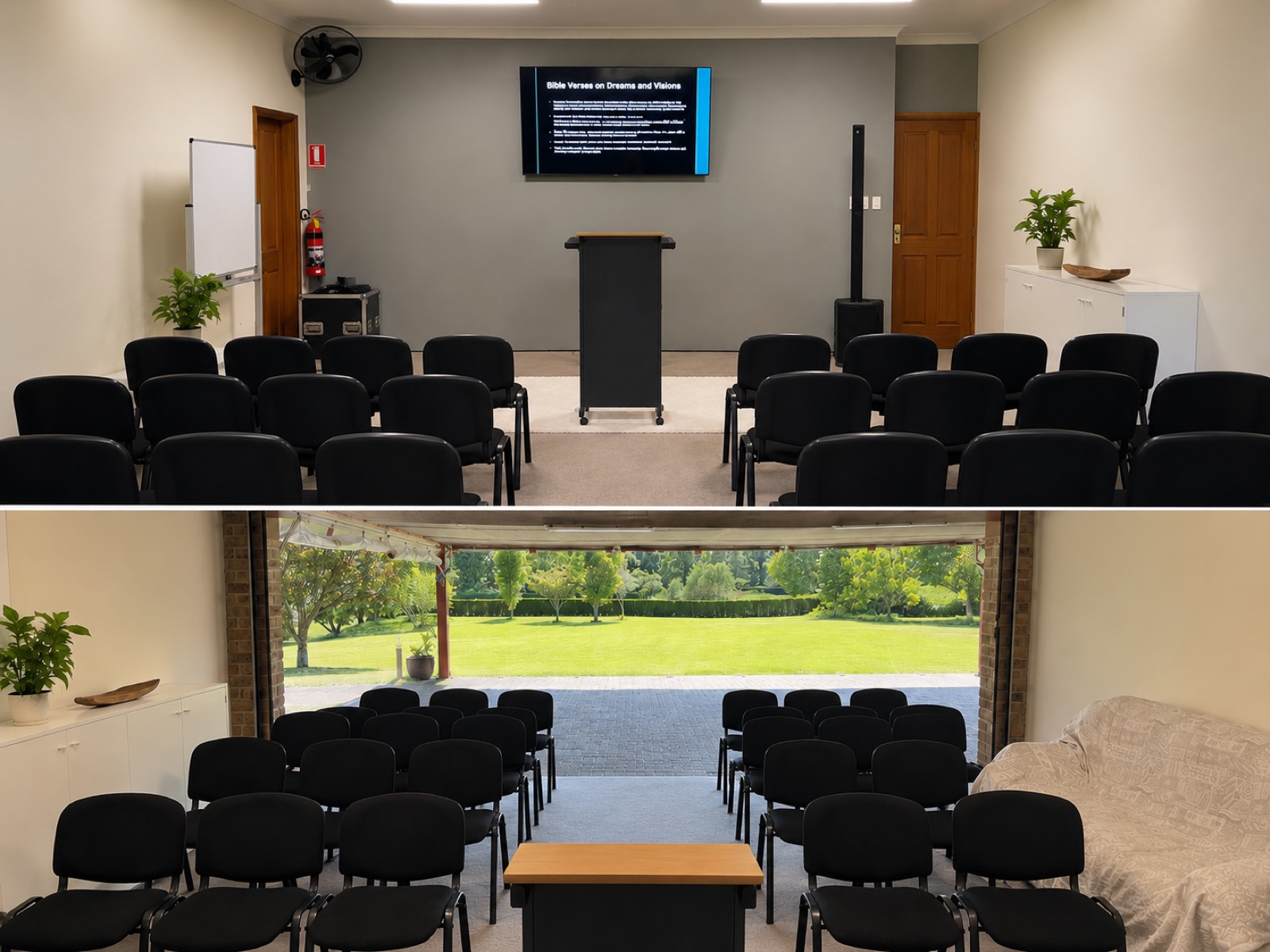
Before booking, consider how many people need to gather together, whether you need a stage or presentation facilities, what sound equipment is required, whether musicians will be involved, and whether you need smaller breakout areas. For larger gatherings, our Christian conference venue page sets out the Pavilion and meeting spaces.
Also consider what happens between sessions.
People need somewhere to have coffee, sit in smaller groups, pray together or continue conversations that began during the meeting.
A venue with several different gathering environments gives organisers considerably more flexibility than a single conference room.
5. Don't turn the retreat into another conference
One of the temptations when organising a church weekend is to fill the schedule.
Morning devotion. Breakfast. Worship. Session. Morning tea. Session. Lunch. Workshop. Afternoon session. Dinner. Evening meeting.
By Sunday afternoon, everyone needs another weekend to recover.
Teaching and worship may be important parts of the retreat, but so are meals, conversations, walks, prayer, rest and simply spending time together.
Some of the most significant conversations may happen when nobody is holding a microphone.
Build margins deliberately.
6. Make room for prayer and reflection
A retreat provides something increasingly difficult to find in ordinary life: uninterrupted time.
Not everyone needs to use that time in the same way.
Some people may want to pray together. Others may appreciate walking alone, sitting beside the creek, reading Scripture outside or simply having an hour without a programme.
A property with extensive natural areas makes this much easier.
Instead of trying to manufacture a reflective atmosphere inside a meeting room, allow the surroundings to help create it.
7. Let people enjoy being together
Spiritual retreats do not need to feel serious every minute.
Laughter, swimming, meals, games and shared experiences can be just as important to building Christian community as formal sessions.
This is particularly true when people normally only see one another for a few minutes before or after a Sunday service.
At Oasis of Hope, groups can spread out across the lawns and outdoor areas, swim in the pool, relax in the spa/jacuzzi or Finnish sauna, share meals and spend unstructured time together.
For some people, the sauna or spa might simply be a chance to relax after a full day. For others, sitting together away from the formal programme creates exactly the kind of conversation that a retreat is intended to make possible.
Providing several different ways to spend free time also means that nobody has to participate in the same activity.
8. Build one shared experience into the weekend
A retreat becomes more memorable when there is something the group experiences together outside the normal meeting programme.
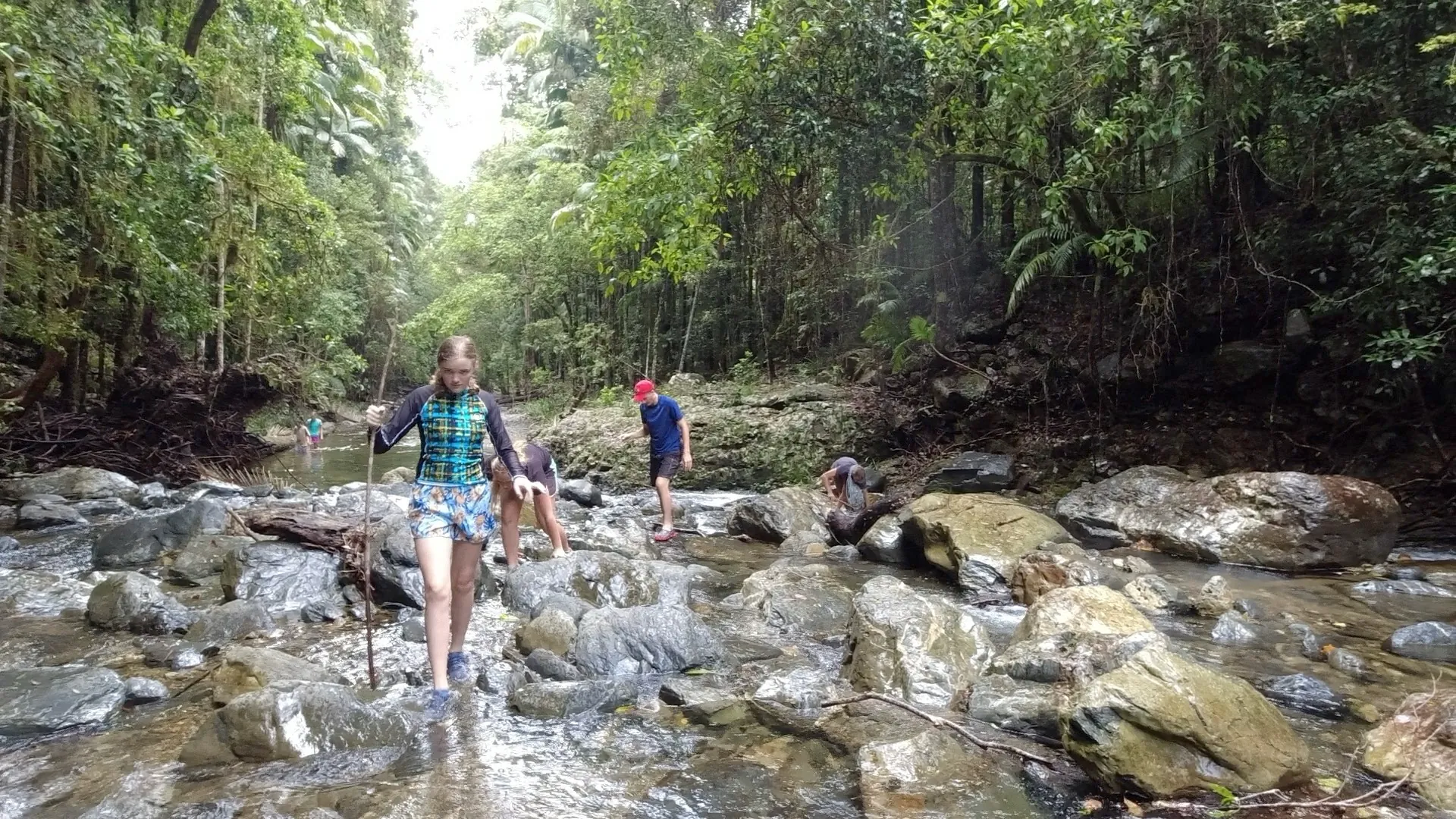
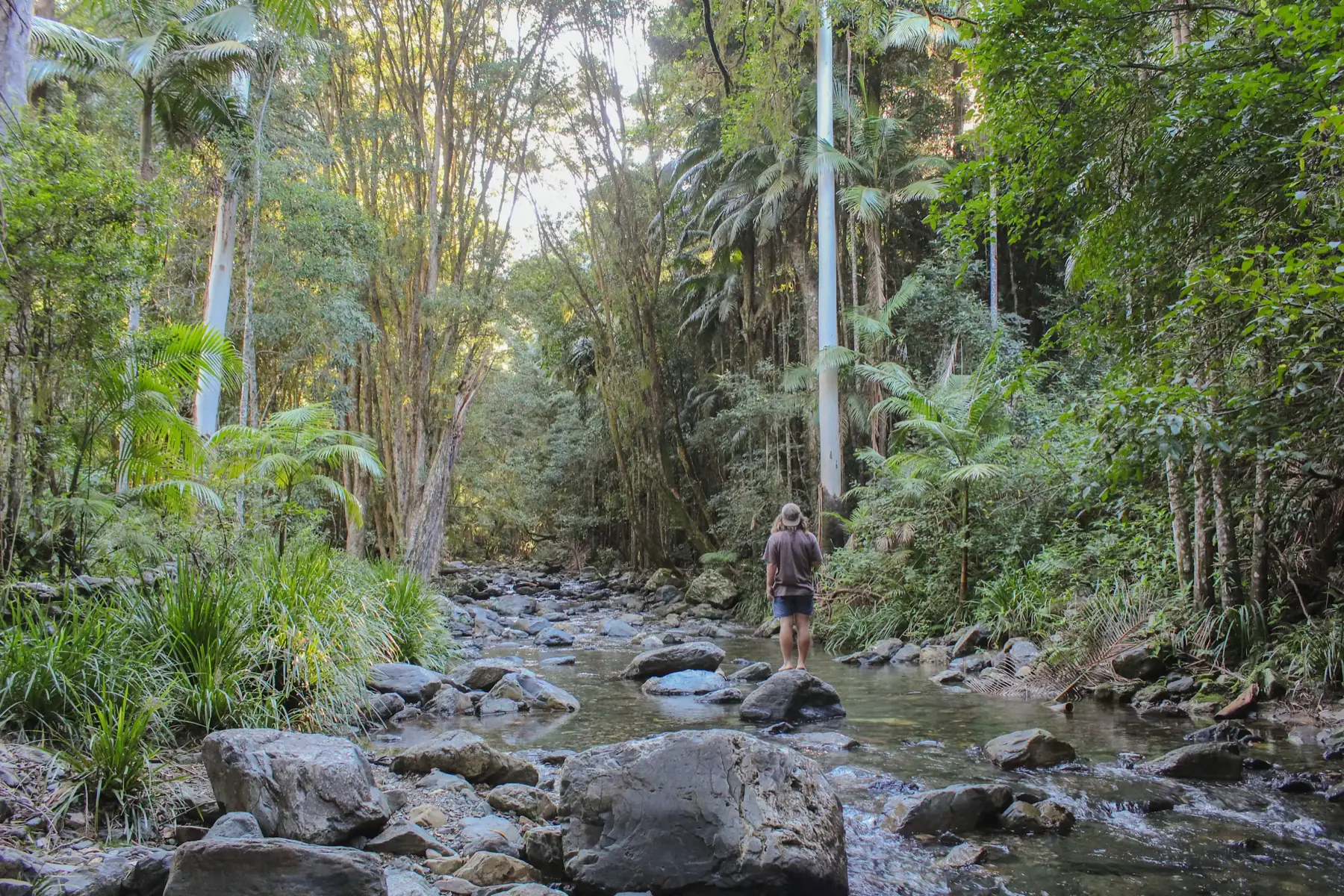
At Oasis of Hope, one option is the waterfall walk that begins directly from the property.
The route follows the creek through the surrounding rainforest, rock pools and swimming holes before reaching a secluded waterfall and natural swimming pool. Oasis of Hope is bordered by State Forest and national park, so groups can move directly from the estate into the surrounding natural environment without first driving somewhere for an excursion.
For a church group, a walk like this can become much more than an activity.
People walk and talk together. Relationships develop between people who might rarely speak at church. Smaller conversations form naturally along the way. Some may finish with a swim beneath the waterfall.
The walk itself is an active natural creek route, so organisers should take account of conditions, footwear, mobility and the abilities of participants rather than treating it as a conventional paved walking track. The creek and waterfall guide explains what's involved.
9. Think carefully about meals
Eating together has always been an important part of Christian community, and retreats are no exception.
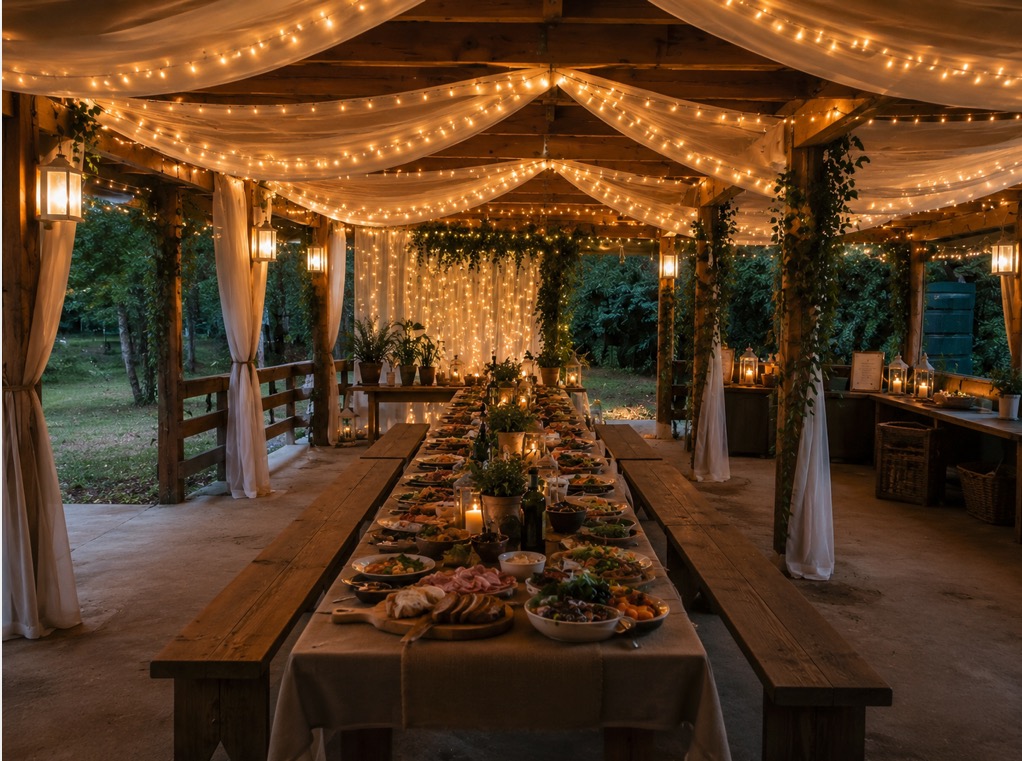
Meals provide natural gathering points throughout the weekend.
Depending on the size and style of the retreat, you might use professional catering, organise cooking teams, self-cater or combine several approaches.
For smaller groups, preparing food together can actually become part of the experience. For larger groups, however, asking a handful of volunteers to spend the entire retreat cooking and washing dishes may prevent them from participating in the very weekend they came to attend.
Plan meals with both cost and workload in mind.
10. Consider families and different generations
Whole-church retreats need to work for more than one type of person.
Children need space. Teenagers may want independence. Older members may need comfortable accommodation and easier access. Parents may need flexibility around children's routines.
Not every activity needs to include everyone.
In fact, one of the strengths of a property with substantial grounds and different facilities is that several things can happen simultaneously. Some people can swim, others can use the spa or Finnish sauna, children can enjoy outdoor space, and another group can continue a discussion or prayer time.
Everyone can then come back together for the main meals and gatherings.
11. Think beyond bedrooms if your group is larger
Church groups can quickly become too large for conventional accommodation.
One solution is combining permanent accommodation with camping.
This allows those who need greater comfort to stay in bedrooms while other participants camp nearby, provided the venue has appropriate facilities and the arrangement suits the booking. Our church camp accommodation page covers this combination.
For churches, this can also help make a retreat more affordable.
The important thing is to understand the total capacity, bathrooms and showers, camping facilities and any conditions that apply before advertising the weekend to the congregation.
12. Give leaders some space too
Church retreats are often refreshing for everyone except the people running them.
Pastors and leaders can easily spend the entire weekend solving problems, answering questions and managing the programme.
Try to distribute responsibility.
Different people can coordinate meals, activities, children's arrangements, worship and practical matters. If possible, give the main leaders some genuine downtime as well. For teams wanting time of their own, our leadership retreat page may be a better fit.
A retreat should not simply relocate the pressures of church leadership to a prettier location.
13. Finish with space to respond
Not every retreat needs to conclude with another long teaching session.
Sometimes the most valuable final gathering is relatively simple.
- What has God been saying to us?
- What are we taking home?
- Is there something we need to change?
- Is there someone we need to encourage or pray for?
- What do we sense God inviting us into next?
Allow people to reflect on what has happened rather than rushing immediately from the final session into packing cars.
Why the NSW Mid North Coast works well for church retreats
For churches looking for a retreat venue in NSW, the Mid North Coast provides an attractive balance between accessibility and genuine separation from everyday life.
Coffs Harbour offers the practical advantages of a regional centre, while its surrounding hinterland quickly becomes rural, forested and peaceful.
That means groups can gather somewhere that genuinely feels like a retreat without necessarily travelling to an extremely isolated location.
For churches travelling from elsewhere in NSW or southern Queensland, Coffs Harbour can also work well as a destination for a weekend or multi-day gathering.
Church retreats at Oasis of Hope
Oasis of Hope is a private retreat estate in the Coffs Harbour hinterland where church groups can worship, meet, stay and spend time together in one environment.
The property combines accommodation for up to 21 guests in the main accommodation areas with group meeting and event spaces, extensive lawns and outdoor areas, a swimming pool, spa/jacuzzi and Finnish sauna, and access to the creek and waterfall experience directly from the estate.
For suitable larger groups, accommodation can also be combined with camping and additional gathering spaces depending on the size and nature of the retreat.
The aim is not simply to provide somewhere for a church to sleep and hold meetings. It is to provide enough space for the different parts of a retreat to happen naturally: worship and teaching, meals, prayer, conversations, recreation, rest and time together.